
Can You Wallpaper Over Textured, Rendered or Plasterboard Walls?
Why Most Wallpaper Advice Doesn't Apply to Australian Walls
Search "can you wallpaper over textured walls" and almost everything you find assumes a US house: taped drywall with an orange-peel or knockdown spray texture. Australian homes are built differently. We have set plasterboard with a smooth skim, cement render over brick, fibro sheeting in older stock, VJ boards in Queenslanders, and brick veneer interiors that are sometimes left exposed.
Each of those behaves differently under wallpaper. Here is what actually happens on Australian wall types, and what to do about it.
The Golden Rule
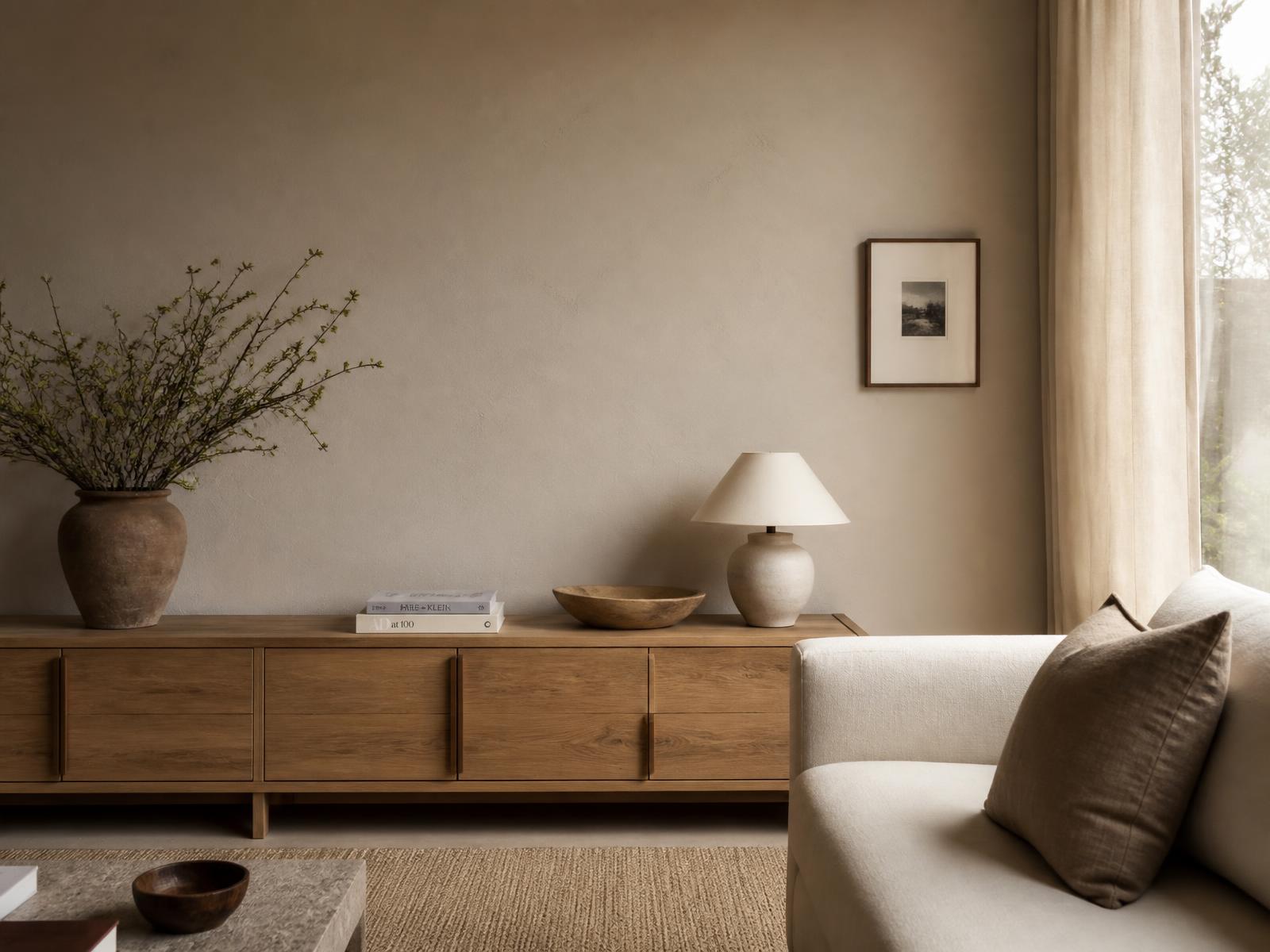
Wallpaper does not hide texture. It telegraphs it.
Whatever is under the paper will show through as a shadow, especially in raking light from a window or a downlight near the wall. A perfectly smooth wall at 9am can look like the surface of the moon at 5pm. Every decision below flows from that one fact.
The second rule: adhesion needs a sound, sealed, low-porosity surface. Anything chalky, dusty, flaking or aggressively absorbent will fail, sometimes months later.
Set Plasterboard — The Ideal Surface
This is the standard in most Australian homes built or renovated in the last forty years: plasterboard sheets, taped and set, then painted. It is the surface both traditional and peel and stick wallpaper are designed for.
What to check:
- Run your hand over joins and screw or nail heads. Any proud patch will show.
- Look for flat, matte, chalky paint. Old low-sheen and flat acrylics can be powdery; wipe with a dark cloth and see what comes off.
- Check the paint age. Anything under about four weeks old is not fully cured and will lift when the wallpaper eventually comes off. Wait.
Preparation: wash with sugar soap, rinse, let it dry fully, fill and sand any dings, and you are done. If the paint is chalky or the wall has been patched, spot-prime or roll a sealer coat and let it cure.
Lightly Textured or Roll-Textured Paint
Some Australian walls, particularly in homes from the 70s through 90s, carry a light roller texture or a fine sand-finish paint. Peel and stick will physically stick to this, but the adhesive only makes contact with the high points. That means less bond area, and the texture reading through the print.
Your options, in order of cost:
- Skim coat and sand. A thin coat of joint compound over the whole wall, sanded flat, primed. This is the right answer and it is not difficult — it is just dusty and slow.
- Sand it back. Works if the texture is very light. Wear a P2 mask.
- Choose a forgiving design. Dark colourways, dense botanicals, and heavily textured or painterly prints hide substrate shadow far better than pale, flat, minimal designs. Light plains are the least forgiving thing you can put on an imperfect wall.
- Line the wall. Lining paper hung horizontally then papered over is the traditional trade solution and still the best one for stubborn walls.
Heavy Texture, Knockdown and Render
If you can catch a fingernail in it, wallpaper is not going straight onto it.
Cement render over brick is common in Australian homes and it presents two problems: the surface is rarely flat enough, and unsealed render is highly alkaline and very absorbent. It will drink adhesive and it can burn through paper over time.
What works:
- Seal it. An appropriate masonry sealer or primer, applied per the manufacturer's directions, is non-negotiable on bare render.
- Skim it. For a proper result, have it skim-coated flat and set before papering.
- Or don't. Sometimes the render is the feature. A rendered wall painted well and a wallpapered feature wall elsewhere in the room is a better outcome than a compromised install.
Exposed Brick
Short answer: no. Not directly, and not with peel and stick.
The mortar lines are 5–10mm deep, the surface is porous and dusty, and there is nothing continuous for adhesive to grip. If you want a papered wall where brick currently is, you are looking at battening and sheeting it in plasterboard, or a full render-and-set. Both are trade jobs.
Note that in Victoria, rental regulations specifically exclude exposed brick and concrete from the "no consent needed" picture-hook provisions — which tells you something about how these surfaces behave.
Fibro and Older Sheeting
Homes built roughly before the late 1980s may contain asbestos-cement sheeting. This is not a DIY judgement call.
Do not sand, drill, cut or disturb any older sheeting you cannot positively identify. Bonded asbestos is safe while it is intact and sealed. It becomes dangerous when you make dust. If your home is of that era and you are planning to sand or skim, get the material identified by a licensed assessor first. Wallpapering over a sound, painted, undisturbed sheeted wall is generally fine — the risk is entirely in the preparation.
VJ Boards and Panelled Walls
Vertical joint boards in Queenslanders and character homes have regular grooves every 100–150mm. Wallpaper will bridge the groove and then sink into it over time, leaving a line down your pattern every few centimetres.
Options:
- Fill the grooves with flexible filler, sand flush, prime. This is a real job and it also destroys the VJ character, so be sure.
- Sheet over them with 3–6mm ply or plasterboard, set the joins, then paper.
- Work with them instead. VJ below a dado rail, wallpaper above, is a genuinely beautiful heritage detail and half the work.
Over Existing Wallpaper
Don't. Two reasons: the seams of the old paper will telegraph through the new one, and the moisture or adhesive in the new layer can loosen the old, taking both off the wall together. Strip it properly, wash the residual adhesive off, let it dry, prime.
The one exception is genuine lining paper in good condition, which is designed to be papered over.
Bathrooms, Laundries and Kitchens
Substrate is only half the question in wet areas — humidity is the other half. Even a perfectly prepared wall will fail if steam is condensing on it daily. We cover the whole picture in wallpaper in humid Australia and can you use wallpaper in bathrooms.
A Quick Preparation Checklist
Before any wallpaper goes up, in any Australian home:
- Wall is clean — sugar soap, rinsed, fully dry
- Wall is flat — no proud joins, screw heads, or filler ridges
- Wall is sound — no flaking, chalking, bubbling or water damage
- Paint is cured — at least four weeks, ideally longer
- Wall is sealed if it is bare render, new plaster, or chalky old paint
- You have tested a small piece in an inconspicuous spot and left it a week
- The room is at a stable temperature — adhesives behave badly in extremes
The Honest Recommendation
Made-to-measure wallpaper is only as good as the wall behind it. If you take one thing from this guide, make it this: spend the extra weekend on preparation. Nobody has ever regretted a wall that was too flat.
If your wall genuinely isn't suitable and you would rather not do the prep, our installation partners can assess and prepare it properly — book a consultation and get an honest answer before you order.
Not sure your wall is up to it? Order a $10 sample, stick it up for a fortnight, and let the wall tell you. And when you're ready to measure, our measuring guide and calculator will get the numbers right.
Frequently Asked Questions
Explore Related Collections
Continue Reading
How to Measure Your Walls for Wallpaper: A Complete Guide
How-To • 4 min read
7 Common Wallpaper Installation Mistakes (And How to Avoid Them)
How-To • 5 min read
How to Remove Peel and Stick Wallpaper Without Damaging Your Walls
How-To • 5 min read
15 Bedroom Wallpaper Ideas That Australian Interior Designers Love
Inspiration • 9 min read