Can You Put Wallpaper in a Rental? Australian Tenancy Rules, State by State
The Question Every Australian Renter Asks
Around a third of Australian households rent, and the single most common message we get is some version of: "I love this, but am I allowed?"
Here is the honest starting point, and it is important. No Australian residential tenancy law names wallpaper. Not peel and stick, not removable, not adhesive wall coverings. Every state and territory names picture hooks, nails and screws. None of them name wallpaper. That means the answer in every jurisdiction is an interpretation, not a right — and anyone telling you otherwise is guessing confidently.
What follows is a plain-English map of where the rules land, so you can have an informed conversation with your landlord or agent instead of a hopeful one. This is general information, not legal advice, and tenancy law changes — check your state authority before you commit.
The Two Questions That Decide Everything
Strip away the jurisdictional detail and every state is really asking the same two things.
Is it a modification? Anything that changes the premises generally needs consent. Where states differ is whether the landlord is allowed to say no for any reason, or only for good reasons.
Does it come off cleanly? Almost every framework, however it is worded, cares about whether the property can be returned to its original condition. This is where peel and stick genuinely differs from traditional paste — and where your preparation matters enormously.
State by State
New South Wales — Residential Tenancies Act 2010, section 66. Written consent is required for alterations. Critically, the Regulation includes a list of minor alterations where consent must not be unreasonably refused, and that list contains a catch-all for modifications that do not penetrate or permanently modify a surface, fixture or the structure. That catch-all is the strongest textual argument for removable wallpaper anywhere in Australia — though "does not permanently modify a surface" becomes arguable if removal lifts paint. You still need to ask, and you are still responsible for repairing any damage on removal. NSW Fair Trading is the authority.
Victoria — Residential Tenancies Act 1997, section 64, with Regulations 26 and 28. Victoria has a two-tier system. Regulation 26 lists modifications needing no consent at all — including picture hooks and wall-mount screws, though not on exposed brick or concrete. Regulation 28 lists modifications where consent is required but cannot be unreasonably refused, and notably that list includes painting. Wallpaper appears in neither list, which puts it in the general consent category. Tenants must restore the property to its pre-modification condition, fair wear and tear excepted, unless the rental provider waives it. Consumer Affairs Victoria is the authority.
Queensland — Residential Tenancies and Rooming Accommodation Act 2008. You submit a written request and the lessor has 28 days to respond. Since 1 May 2025 the lessor must not act unreasonably in refusing, with QCAT weighing factors including how easily the change can be removed. There is no prescribed list. The Residential Tenancies Authority is the authority, and note that if you are in a body corporate scheme, its approval may run past that 28-day clock.
Western Australia — this is the one to read carefully. WA's minor modifications regime, in force since 29 July 2024, works from a closed prescribed list. That list includes painting and picture hooks. Anything not on the list is, by the regulation's own construction, not a minor modification. Adhesive wallpaper is not on it. That does not make wallpaper illegal — it means it falls outside the protected regime entirely and sits at the lessor's ordinary discretion. Consumer Protection (DEMIRS) is the authority.
South Australia — Residential Tenancies Act 1995, section 70, with reforms commenced 1 July 2024. Written consent is required, and it must not be unreasonably withheld where the alteration is "minor in nature". There is no prescribed list and "minor in nature" is undefined, which cuts both ways: no explicit permission, but also no explicit exclusion. Section 70(2a) requires you to return the premises to its former condition at your own cost unless agreed otherwise. Consumer and Business Services is the authority.
Tasmania — Residential Tenancy Act 1997, section 54. Written consent of the owner is required for any alteration, addition or fixture. Tasmania has no minor-modifications list and no statutory unreasonable-refusal test for alterations. It is the most permission-dependent state in the country. Consumer, Building and Occupational Services is the authority.
Australian Capital Territory, the strongest tenant position in Australia. The ACT recognises "special modifications", described as changes that are "easily removed or undone", with examples including picture hooks and a bathroom shelf. That phrase is the best available fit for peel and stick anywhere in the country. If a lessor wants to refuse, they must apply to ACAT within 14 days, and if they miss it, the lessor is taken to consent.
Northern Territory — Residential Tenancies Act 1999. Written consent of the landlord is required. Only safety and security modifications get statutory protection from unreasonable refusal. The premises must be returned to its original condition at the end of the tenancy unless otherwise agreed. NT Consumer Affairs is the authority.
If You're in an Apartment, There's a Second Gate
Strata adds a layer. Australian strata law broadly separates lot property — the internal, non-structural finishes an owner controls — from common property, being structure, boundary walls, waterproofing and external appearance.
In NSW, for instance, the Strata Schemes Management Act 2015 treats "cosmetic work" as needing no owners corporation approval, and its examples include painting internal walls and installing picture hooks. Wallpaper is not named. The defensible general position is that a decorative finish on the internal surface of a lot is closest in character to painting — but by-laws vary scheme to scheme and can be stricter, so read yours.
If you rent in a strata building, you need both your landlord's consent and compliance with the by-laws.
How to Actually Ask — a Script That Works
Most refusals are reflexive, not considered. A specific, low-risk request gets approved far more often than a vague one. Put it in writing and include all five of these:
- Exactly which wall, with dimensions. "The 3m wall behind the bed in the main bedroom", not "some wallpaper".
- The product and that it is removable. State that it is peel and stick, self-adhesive, applied to painted plasterboard, with no paste, primer, sizing or penetration of the surface.
- A photo or sample of the design. Landlords refuse the imagined version. Show them the real one — a $10 sample is worth the postage here.
- Your removal commitment. Offer explicitly to remove it and make good at the end of the tenancy, at your cost.
- A note on value. Neutral, well-chosen wallpaper is an improvement. Say you are happy to leave it if they prefer.
Then get the reply in writing and keep it with your lease. A verbal yes from an agent who leaves the agency in eighteen months is worth nothing at final inspection.
Protecting Your Bond
Approval is only half the job. The other half is making sure removal is genuinely clean.
- Photograph the wall before you start, in daylight, close up. Condition-report evidence is your best friend.
- Test a small piece first, ideally in a wardrobe or behind a door. Leave it a fortnight, then remove it and check the paint. Freshly painted walls — anything under about four weeks old — are the highest risk, because the paint has not fully cured and will lift.
- Avoid walls with flaking, chalky or previously water-damaged paint. No adhesive product will come off those cleanly.
- Remove it slowly, at a low angle, with warmth. A hairdryer on low softens the adhesive. Pulling fast and perpendicular is what takes the paint with it.
- Keep a leftover offcut in case you need to patch.
Our detailed walkthrough is in how to remove peel and stick wallpaper, and can you put wallpaper in a rental covers which designs and finishes behave best on rental walls.
What to Choose If You Rent
Renting rewards restraint and reversibility. In practice that means:
- One wall, not the room. Less to remove, less to argue about, and usually better design anyway.
- Softer, tonal patterns. Botanical, textured and minimalist designs read as considered rather than as a statement your landlord has to live with later.
- Made-to-measure panels. Fewer seams than roll product, and no leftover you paid for and can't use.
- Renter-friendly rooms. Bedrooms, home offices and living rooms. Skip bathrooms and laundries in a rental — humidity and adhesive are a bad combination, as we cover in wallpaper in humid Australia.
The Bottom Line
There is no Australian state where removable wallpaper is expressly permitted, and none where it is expressly banned. NSW and the ACT give you the strongest arguments. WA gives you the weakest. Everywhere else turns on your landlord's reasonableness and, increasingly, on whether refusing would be considered unreasonable.
Ask properly, in writing, with a sample in hand and a removal commitment attached. Most people who do that get a yes.
Browse renter-friendly designs, or order a sample to take to the conversation.
Choosing the Right Wallpaper for a Rental
What to Look For in Rental Wallpaper
Not all removable wallpapers are suitable for rentals. Here's what to check:
-
Adhesive quality — Look for wallpaper that uses a pressure-sensitive adhesive. It should stick firmly but release cleanly. Cheap options may leave residue or fall off walls.
-
Surface compatibility — Peel and stick works best on smooth, painted surfaces. If your rental has textured walls, freshly painted surfaces (less than 4 weeks old), or exposed brick, results may vary.
-
Print quality — Premium wallpapers use eco-friendly, fade-resistant inks that look stunning for years. Bargain options often fade or look pixelated up close.
-
Material weight — Heavier materials stay flatter and resist bubbling. Lightweight vinyl can curl at edges, especially in warm Australian climates.
Best Styles for Rental Spaces
For Living Rooms:
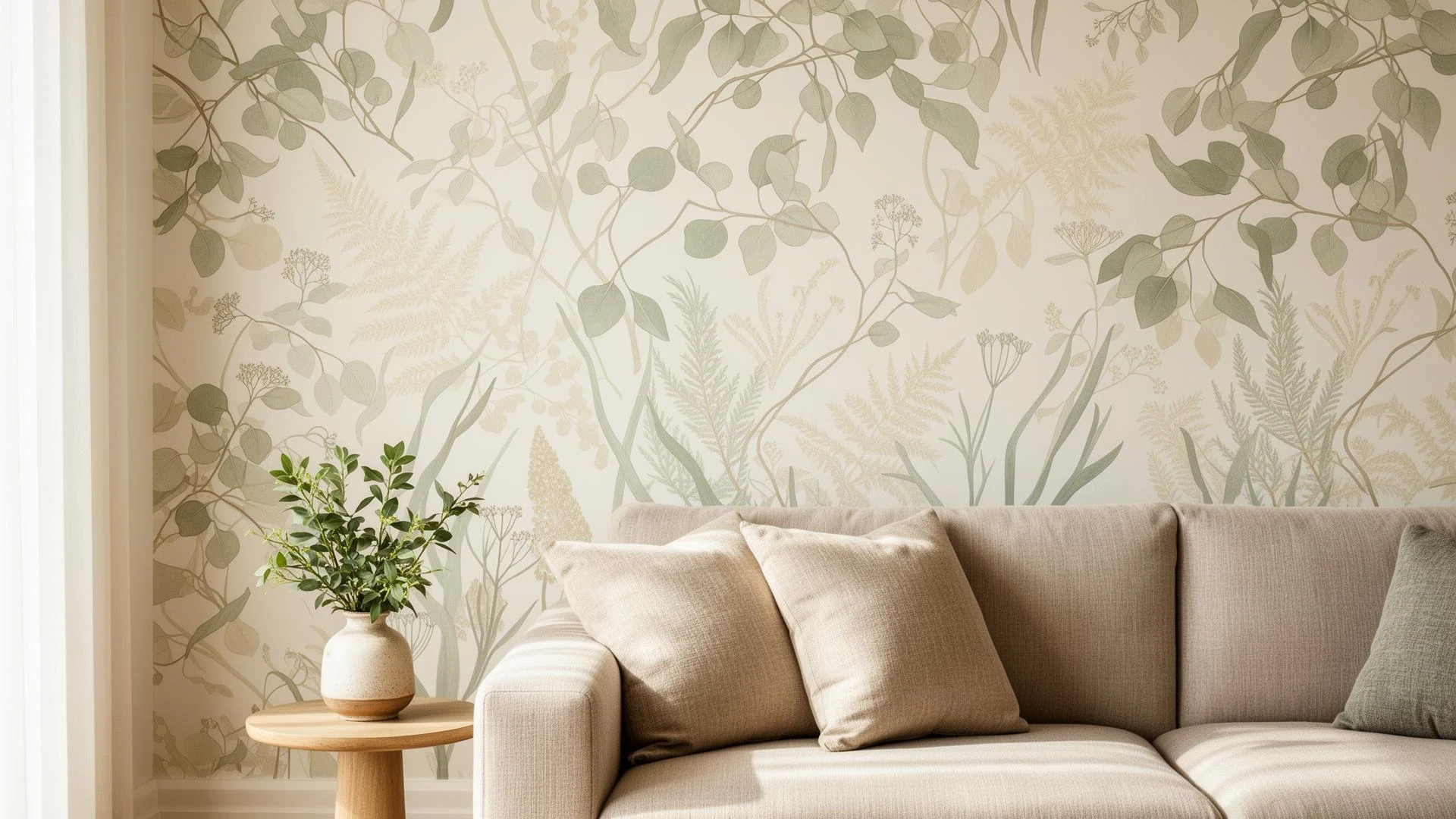
- Botanical prints bring life to neutral rental walls
- Geometric patterns add modern sophistication
- Textured wallpapers (faux linen, concrete) create depth without overwhelming
For Bedrooms:
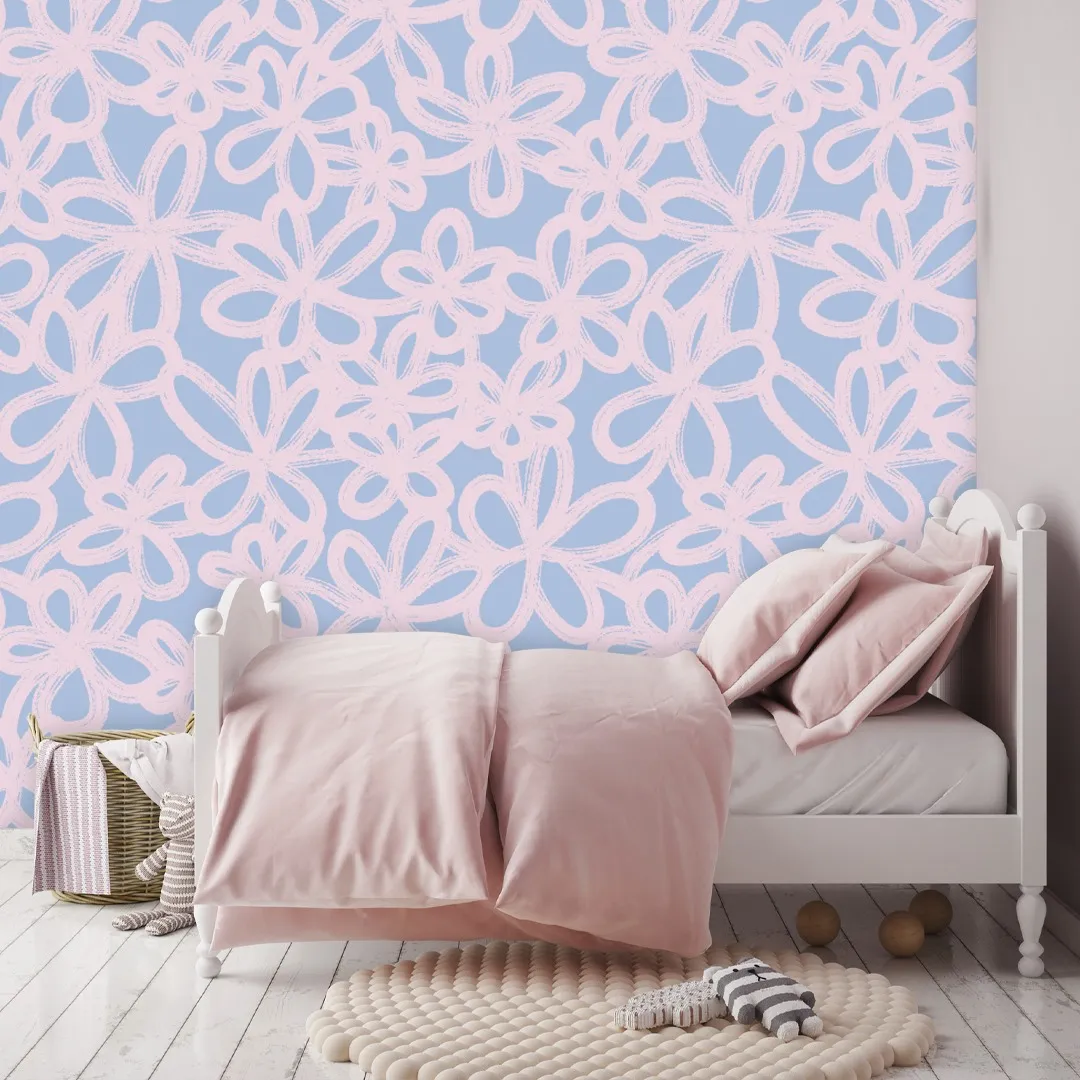
- Soft florals behind the bed create a calming focal point
- Abstract watercolours add personality without being too bold
- Minimalist patterns work in any sized room
For Home Offices:
- Subtle textures reduce video call background boredom
- Nature-inspired prints boost creativity and calm
- Dark, moody patterns make small studies feel intentional
The Cost of Renter-Friendly Wallpaper
A single accent wall in a standard bedroom (roughly 3m wide × 2.7m high) costs around $640 in our base range from $79/m², or more if you choose a $99/m² artist collection. That's less than a weekend away and transforms your space for the entire lease.
Compare that to the cost of repainting at the end of a lease ($300–$800 per room), and wallpaper is the smarter investment.
Frequently Asked Questions
Continue Reading
Can You Use Wallpaper in Bathrooms? An Australian Guide to Moisture-Smart Walls
Guides • 7 min read
How much does wallpaper cost in Australia?
Guides • 8 min read
Peel and Stick Wallpaper vs Traditional: Which Is Right for Your Home?
Guides • 5 min read
Wallpaper in Humid Australia: Tropical Summers, Condensation and How to Beat Mould
Guides • 9 min read