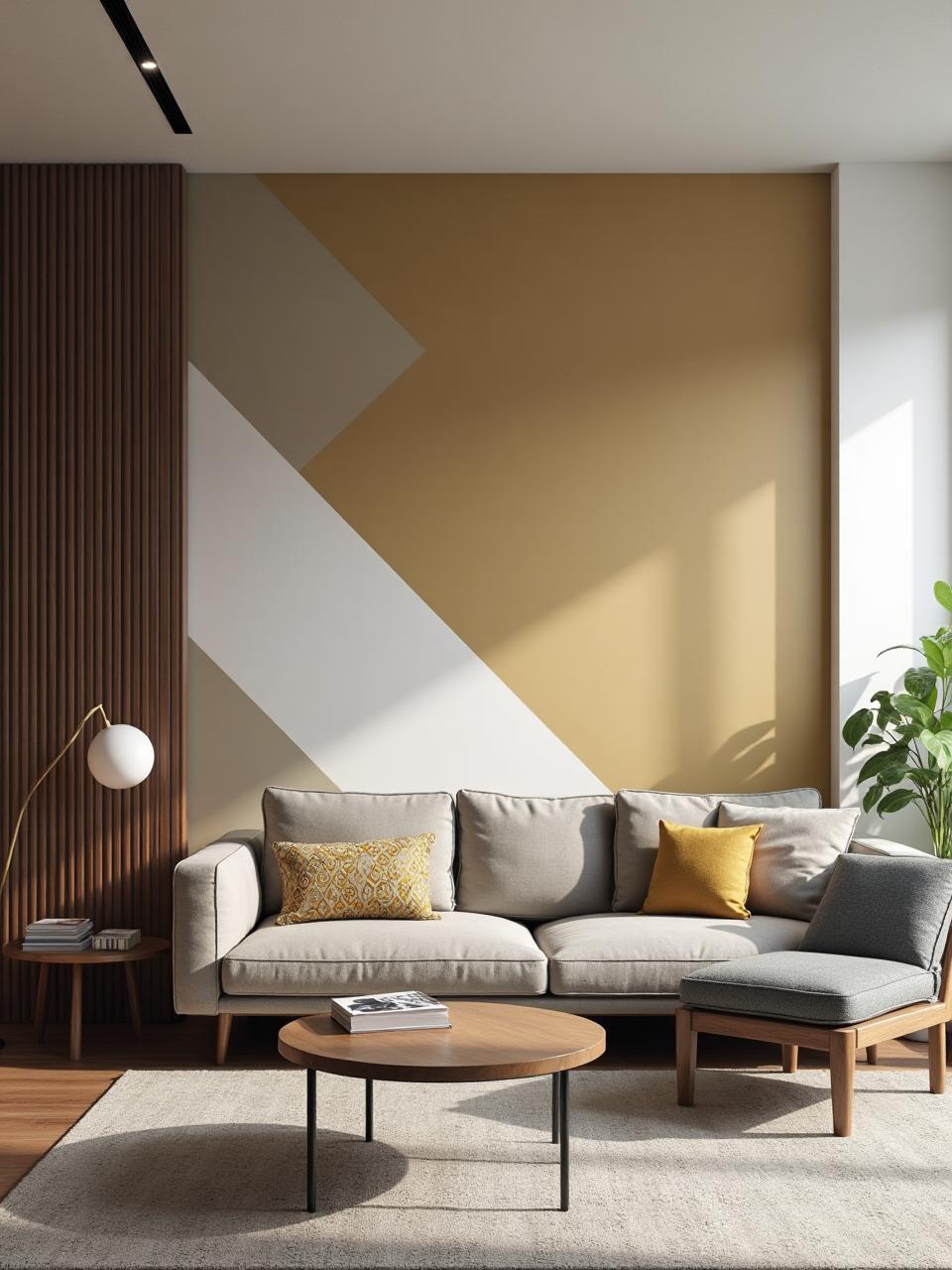
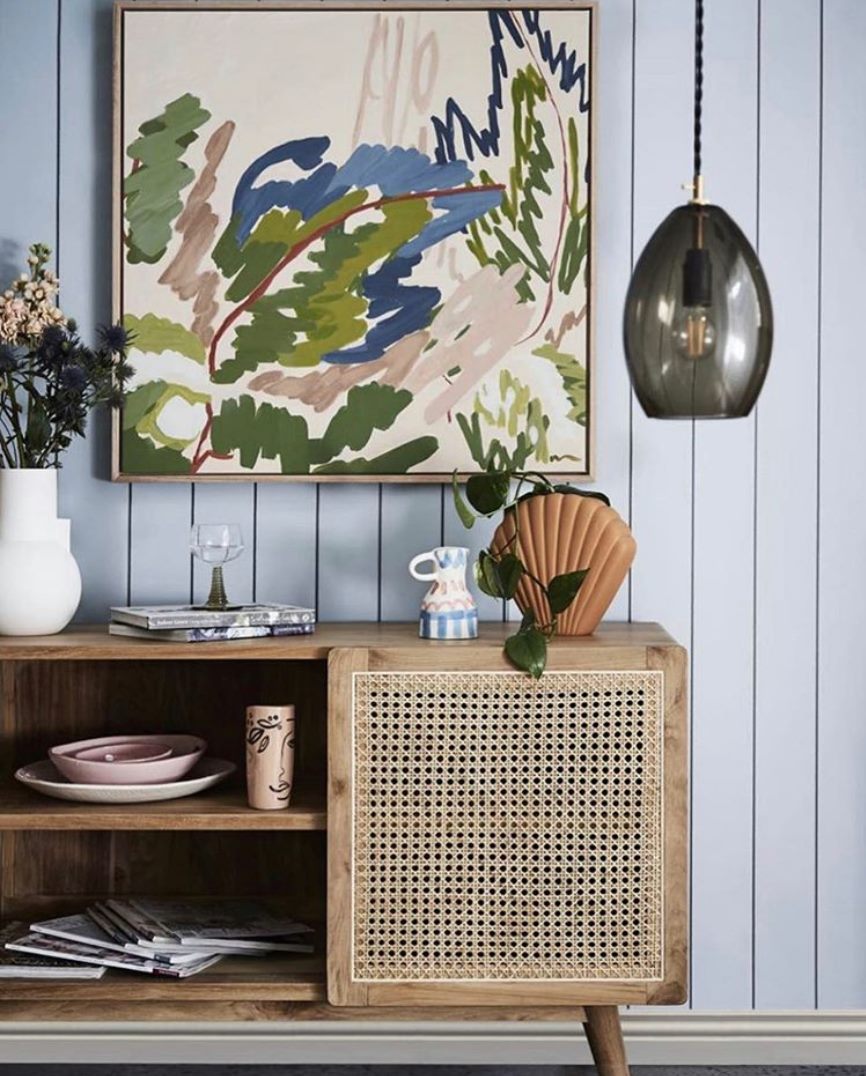
Dining Room Wallpaper Ideas for Australian Homes

The dining room is the one room you can be a little braver with. You're in there for an hour at a time, usually in the evening, usually with people you like. Nobody's trying to fall asleep in it or work in it. That makes it the best room in the house for a wallpaper you'd hesitate to put anywhere else.
It's also the room most Australian homes have quietly given up on. Open-plan living turned the dining room into a table at the end of the kitchen, and the walls around it stayed white. If you're hosting this summer, wallpaper is the fastest way to give that zone its own identity again.
Here's how to choose a design, which wall to put it on, and how to get the scale right before you order.
Start with how you actually use the room
Before you look at a single pattern, think about when the room gets used.
Mostly at night. If the dining room comes alive after dark, go deeper than you think. Forest green, aubergine, inky blue and chocolate all look rich under warm pendant light and candles. Dark walls also make a room's edges recede, so a small dining space can feel more intimate rather than smaller.
Mostly by day. A breakfast nook or a north-facing dining area with big windows suits lighter grounds. Linen textures, soft plaster looks and pale botanicals keep it fresh when the sun's pouring in.
Both, and it's open plan. Pick something that talks to the kitchen and living areas you can see from the table. That usually means pulling one colour from the cabinetry, benchtop or sofa and finding a wallpaper that carries it.
Which wall should you wallpaper?
In most Australian dining rooms one wall does the heavy lifting. A few rules of thumb:
The wall you face when you sit down. If guests see one wall more than the others, that's your wall. In a lot of homes it's the long wall the table runs parallel to.
The wall behind a sideboard or buffet. A sideboard gives the wallpaper a natural frame. Add a lamp, a few ceramics and a mirror or artwork and the whole corner looks styled with almost no effort.
The end wall in an open-plan space. If your dining table sits at the end of a long open room, papering the end wall defines the dining zone without building anything. It reads as a separate room from the lounge.
All four walls. In a separate, enclosed dining room, wrapping the whole room is worth considering. It feels like stepping into a jewellery box. This works best with a quieter, smaller-scale pattern or a texture, so the room feels finished rather than busy.
Avoid papering a wall that's mostly windows, doors or a servery. You'll spend more on cutting around openings than you get back in impact.
If you're wondering how the rest of the room should come together, our dining room page has designs grouped by style.
Get the pattern scale right
Scale is where most dining room wallpaper goes wrong, and it's the easiest thing to fix.
A dining room is usually viewed from a seated position, about two to three metres from the wall. At that distance a tiny pattern turns to mush and reads as a flat colour. A very large pattern on a short wall can feel like it's pressing in on the table.
As a starting point:
- Small rooms or all four walls: small to medium scale, or a texture with no obvious repeat.
- One long feature wall: medium to large scale, so the motif reads clearly from the table.
- A big end wall in open plan: go large, or use a mural so the wall reads as a single artwork.
Every Luxe Walls design is printed to order for your exact wall, and you choose the pattern scale with a slider when you order. You can make a deco fan bolder or shrink a botanical until it sits quietly behind the chairs. Try two or three scales on screen before you commit.
Five dining room looks that work in Australian homes
1. Panelled walls without the carpenter
Wainscot panelling is a classic dining room detail, and it suits Federation and Californian bungalow homes as much as new builds. Forest Panels prints moulded panelling in deep green, so you get the architectural look on a flat wall. It pairs well with a timber table and brass lighting. If green isn't your colour, there's an aubergine version for something moodier.
2. Art Deco for the entertainers
If your dining room is where the cocktails come out, look at the Art Deco collection. Fan and arch motifs suit the room's sense of occasion. Emerald Arches layers soft sage fan shapes in elegant symmetry, which looks glamorous at night without tipping into theme-party territory. Keep the furniture simple and let the wall carry the era.
3. Quiet texture for open-plan living
When the dining table shares a sightline with the kitchen and lounge, a loud pattern can fight with everything else. A linen look is the safer bet. The linen collection gives the wall woven depth in oatmeal, putty, mushroom and greige, so the dining zone feels considered while the overall space stays calm. It's the natural choice for Japandi and organic modern interiors.
4. Mid-century warmth
Post-war homes and anyone with a teak sideboard should look at mid-century geometrics. Sarah Thorpe's Mid-century Geometric in Olive Green is an original artwork from her collection, with structured shapes in the olive palette the era is known for. It sits beautifully behind a round table with bentwood chairs. Sarah's collection is $99/m², and it's available in several colourways including Burnt Orange and Warm Brown.
5. Heritage pattern for period homes
In a Victorian terrace or Federation home, the dining room often has the best proportions in the house: high ceilings and often a picture rail. That's a good excuse for damask or an Arts and Crafts floral. The heritage collection is designed for exactly this, and because the wallpaper peels away, original plaster stays protected underneath.
Colour that flatters food and faces
A dining room has a job most rooms don't: it needs to make the food and the people around the table look good.
Warm beats cool after dark. Greens with a yellow base (think olive or moss) and warm browns glow under incandescent or warm white LED light. Icy blues and cool greys can look flat at night.
Match your light bulbs to the wall. If you're going dark, use warm white globes (2700K to 3000K). They're the difference between a wall that looks rich and one that looks muddy.
Keep the ceiling in mind. A dark wall with a stark white ceiling can feel like a box. A softer white, or the ceiling painted a shade lighter than the wallpaper's ground colour, ties the room together.
Living with wallpaper at the dinner table
Dining rooms take a bit of wear. Chairs get pushed back into walls and the odd splash of red lands where it shouldn't.
A few practical tips:
- Leave a gap between chair backs and the wall, or add a slim sideboard or bench along the papered wall to stop chairs hitting it.
- If you have a dado rail, paper above it and paint below. The painted section takes the scuffs and is easy to touch up.
- Stick a sample up near the table and live with it for a few days. Check it at breakfast and at dinner, because the colour will shift with the light.
Luxe Walls is peel and stick, so it suits a self-install over a weekend, and it comes off cleanly when you're ready for a change. It's backed by a 2-year warranty on fade and adhesion.
What it costs
Core designs start from $79/m² and artist collections, like Sarah Thorpe's, are $99/m². There's a 3m² minimum order. A typical dining room feature wall of about 3.6m wide by 2.7m high is just under 10m², so budget for that plus a little extra for trimming.
Shipping is free on orders over $250 (a flat $49 under that), and Afterpay is available. Because every order is printed to your wall size, there's no stock to sell out and no leftover rolls in the garage.
For designers and stylists
Dining rooms make good trade projects because one wall often does the whole job, which keeps quantities and install time down. Approved trade accounts get $59/m² on the core range and $79/m² on artist originals, with the same 3m² minimum. Order samples for client boards and apply for a trade account on our trade page. It's a self-install product, so include your installer in the quote.
Try it on your wall first
The best way to choose is to see it in your room. Order a sample for $10 posted. It's printed on the actual peel and stick wallpaper, so you can stick it up beside the table and see how it looks with your evening light and your own dinner plates. The $10 is credited against your order if you place it within 30 days.
Frequently asked questions
Explore Related Collections
Continue Reading
15 Bedroom Wallpaper Ideas That Australian Interior Designers Love
Inspiration • 9 min read
Feature Wall Ideas for Australian Homes
Inspiration • 8 min read
Wallpaper in the Kitchen and Laundry: Splashbacks, Pantries and Small-Space Wins
Inspiration • 8 min read

Japandi Wallpaper Ideas for Australian Homes
Inspiration • 7 min read