Wallpaper in the Kitchen and Laundry: Splashbacks, Pantries and Small-Space Wins
The Rooms Nobody Decorates
Australians spend enormous sums on kitchens and then leave the laundry as a white box with a broom in it. The butler's pantry — a fixture of almost every new Australian build — gets the same treatment: functional, unloved, and shut behind a door.
These are the cheapest rooms in the house to transform. A laundry is often 4–6m² of wall. A butler's pantry might be 3m². At made-to-measure pricing that's a few hundred dollars for a room that goes from utility to genuinely delightful, and unlike a kitchen renovation, it takes an afternoon.
Here's where wallpaper works around water, heat and appliances — and where it doesn't.
Luxe Walls guidance: Suitable for well-ventilated bathrooms, powder rooms and laundries. Not recommended for direct splash zones: inside a shower, immediately behind a basin tap, or above a cooktop without a splashback.
The Non-Negotiables First
Kitchens and laundries have three hazards paint doesn't have to deal with: direct water, heat, and grease. Wallpaper handles none of them well in direct contact.
Never put wallpaper:
- Directly behind a cooktop, or within the splash zone of a hob
- Directly behind a kitchen or laundry sink without a hard protective surface
- Inside a shower or bath zone
- Immediately adjacent to an open flame or a heat source
- Behind a dryer vent discharging into the room
Always check local building requirements for splashback zones — a splashback behind a cooktop is a regulated safety element, not a decorative one, and it has material and clearance requirements your builder or certifier can confirm.
With that established, here's what's actually available to you.
The Glass-Over-Wallpaper Splashback
This is the technique that unlocks the kitchen, and it's been used by Australian renovators for years.
You wallpaper the splashback wall, then have a clear toughened glass or acrylic panel installed over it. The glass takes the heat, the water and the grease. The wallpaper sits behind it, protected, delivering a pattern that no printed splashback can match at the price.
Why it works:
- Genuinely custom — any design, any scale, at a fraction of the cost of a printed glass splashback
- Wipes down exactly like a glass splashback, because it is a glass splashback
- Changeable. In five years you can lift the panel, change the paper, and put it back
What to get right:
- Use toughened glass and a licensed installer. Behind a cooktop this is a safety element — get the specification and clearances confirmed by your glazier and builder, and check compliance for the cooktop zone specifically.
- Seal the edges properly so water can't track behind the panel.
- Choose a design with detail that survives being viewed at 300mm. Splashbacks are seen up close.
- Mind the pattern behind the tap and appliances — plan where the cut-outs land before you print.
The Butler's Pantry
If your home has one, this is the single best wallpaper decision available to you.
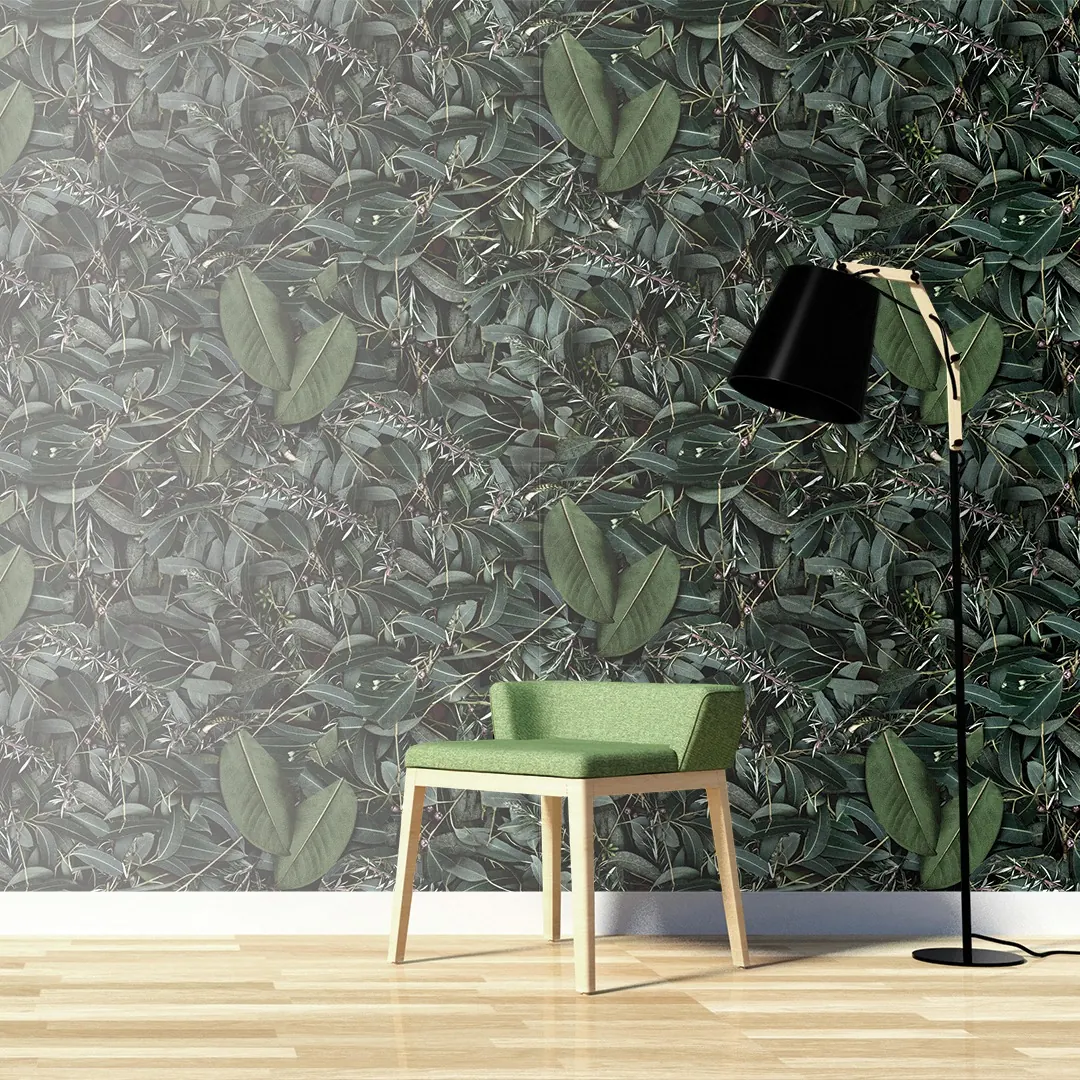
A butler's pantry is small, enclosed, low-traffic, out of the main sightline, and behind a door. That combination means you can be far bolder than you'd ever be in the open kitchen. Deep botanical, dense floral, dramatic chinoiserie or a rich dark texture — things that would overwhelm a living room become a small, private pleasure in a pantry.
Keep the paper away from the pantry sink and any bench-level splash zone, or run the same glass-panel trick over the working section.
The Laundry
Australian laundries are typically narrow, often internal, and almost always a wasted opportunity.
Where the paper goes:
- The wall above the machines and bench, from splashback height up
- The wall opposite the appliances — usually completely dry and completely blank
- Inside the door reveal or the end wall of a galley laundry
Where it doesn't:
- Directly behind the trough or sink without protection
- Behind a dryer vent, or where hot moist air discharges
- Below bench level where washing baskets and mops make contact
Ventilation is the deciding factor. A laundry generates a lot of moisture — a dryer, a trough, and often washing hung indoors. Current construction requirements call for around 40 litres per second of mechanical extraction for a laundry or kitchen where mechanical ventilation is used, discharging outside rather than into the roof space. If your laundry has no window and no working exhaust, sort that before you decorate. Our guide to wallpaper in humid Australia covers the moisture question properly.
Designs That Suit These Rooms
Kitchens and laundries are small, hard-surfaced and often light-poor. That changes what works.
Go pattern-dense, not pattern-large. A big open repeat needs distance to read. In a 1.5m-wide laundry you're standing 800mm from the wall. Smaller, denser designs — stripes, terrazzo, small geometric repeats, tight florals — read correctly at close range.
Consider a checkerboard or grid. Kitchens carry graphic geometry beautifully because they're already full of straight lines — cabinetry, tiles, benchtops.
Lean into the fun. Food and drinks designs are a category that exists for exactly this room and nowhere else. A pantry papered in something joyfully specific is a much better idea than a pantry papered in beige.
Or go moody. Dark, saturated colour in a small windowless laundry doesn't make it feel smaller — it makes it feel deliberate. Our small spaces guide explains why.
Match the metals. Pull a tone from your tapware and handles. It's the cheapest way to make a small room look designed rather than decorated.
Practicalities
Prepare properly. Kitchen and laundry walls carry more grease and residue than any other room in the house, even away from the cooktop. Sugar soap thoroughly, rinse, dry completely. Adhesive will not bond to a greasy film. Our wall preparation guide has the full checklist.
Watch the appliance heat. Leave clearance around ovens, dishwashers and dryers. Appliance side panels get warmer than people expect and adhesive doesn't love it.
Plan for removal. Appliances get replaced. Paper the wall as one field rather than trying to fit around a specific machine's footprint, so a new dishwasher of different dimensions doesn't reveal an unpapered patch.
Renting? These rooms are ideal for a renter, because they're small, low-cost and easy to reverse. Check what you're allowed first — our state-by-state rental guide covers it.
Start With the Smallest Room You Have
There's a reason designers say to be brave in small rooms. The financial risk is minimal, the visual payoff is disproportionate, and you find out very quickly whether you like living with pattern.
If you've been thinking about wallpaper somewhere in the house and haven't committed, do the laundry first. It costs a few hundred dollars, it takes an afternoon, and it will change how you feel about a room you'd stopped looking at.
Run your dimensions through the calculator, order a $10 sample to check the colour against your benchtop, and browse the range when you know what you're working with.
Frequently Asked Questions
Explore Related Collections
Continue Reading
15 Bedroom Wallpaper Ideas That Australian Interior Designers Love
Inspiration • 9 min read
Feature Wall Ideas for Australian Homes
Inspiration • 8 min read

Japandi Wallpaper Ideas for Australian Homes
Inspiration • 7 min read
Wallpaper Colour Psychology: How Wall Colours Affect Your Mood and Wellbeing
Inspiration • 8 min read