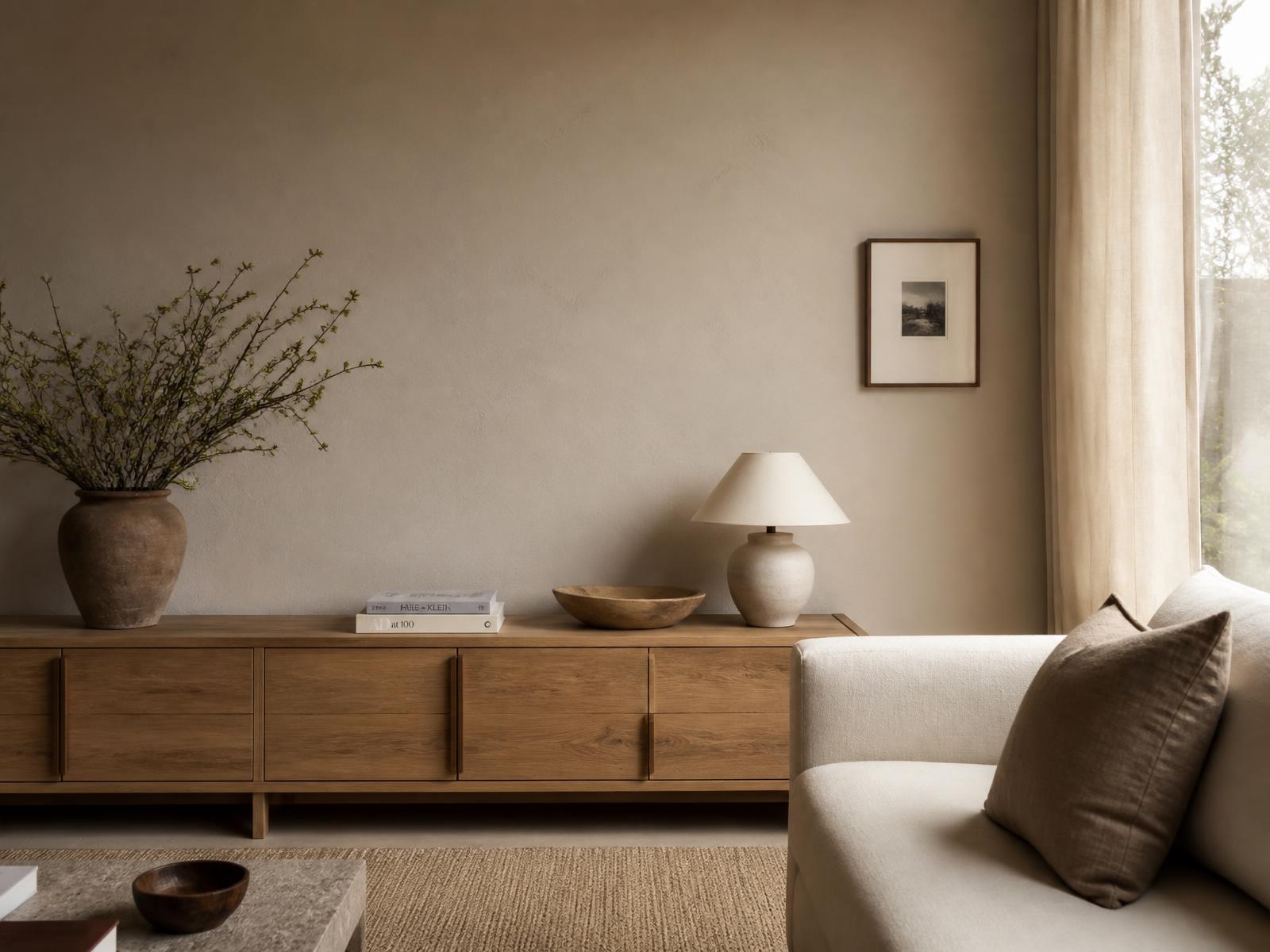
Heritage Wallpaper for Federation and Victorian Homes in Australia

Wallpaper belongs in a Federation or Victorian home. These houses were built in an era when papered walls were the normal finish for halls and formal rooms, so the right pattern doesn't read as a trend. It reads as the house getting its walls back.
The catch is what's underneath. Many period homes still have original plaster, picture rails and cornices, and most owners would rather not commit to a pasted paper they'll be steaming off in ten years. This guide covers how to choose a heritage pattern that suits your home's era, which rooms to start with, and how to do it in a way you can undo later.
What heritage wallpaper means in an Australian home
Heritage wallpaper isn't one style. It's pattern drawn from the decades when much of our older housing went up: Victorian terraces and villas through the second half of the 1800s, then Federation homes from around the turn of the century into the 1910s.
Most of the wallpaper on those walls came from overseas. Until the 1950s almost all wallpaper used in Australian homes was imported, mostly from England, and only two local manufacturers are known to have existed before World War II, both in Sydney. So the motifs Australians lived with were largely the ones in British homes of the same years: damasks, trailing florals, stylised leaves and Arts and Crafts botanicals.
Today's heritage designs take those patterns and adjust the colour. Our heritage collection keeps the structure of a period pattern but recolours it in olive, burgundy, tobacco, dusty blue and cream, so it sits comfortably with modern furniture and lighting instead of looking like a museum room.
Match the pattern to your home's era
You don't need to be a historian to get this right. You just need the pattern and the house to be broadly from the same family.
Victorian (roughly 1850s to 1900). Think formal and symmetrical. Damask is the easy choice here, and it works best in a single colour on a tonal ground. Sage Damask and Cocoa Damask both give that layered, traditional look without the heaviness of red and gold. Terraces with high ceilings can carry a bigger damask than you'd expect.
Federation (roughly 1890s to 1910s). Federation interiors lean towards natural motifs: leaves, flowers and stylised plant forms, often arranged in bands around the room. In the first decade of the 20th century, wide friezes designed for the top section of the wall became popular. A botanical with a bit of age to it suits these homes well. Vintage Banksias has the feel of an old botanical print but uses Australian flora, which is a nice twist: the friezes in one Sydney maker's surviving 1920s sample books didn't include Australian plants or animals at all.
Edwardian and inter-war (1910s to 1930s). Borders and panelling stayed in fashion until the 1930s, and the later end of this period runs into Art Deco. If your home is a 1920s or 1930s bungalow or flat, look at our Art Deco collection for fan and geometric repeats that match the joinery and leadlight of the time.
If your home doesn't fit neatly into one era (plenty don't, after a century of renovations), take your cue from whatever original detail is still there. A ceiling rose, a fireplace surround or the leadlight in the front door will usually tell you which way to go.
Where wallpaper works best in a period home
The entrance hall. Long, narrow halls are a signature of terraces and many Federation homes, and they're the first thing anyone sees. Wallpaper here makes the most of a space that's otherwise just a corridor. Keep the scale moderate, since you're seeing the pattern up close.
The dining room. This is where period homes were at their most decorative, and it's still the room where a strong pattern feels right. You're sitting looking at the walls for an hour at a time, so a damask or a dense floral earns its place. Our dining room page has more designs that suit.
The front bedroom. Often the best-proportioned room in the house, with the highest ceiling and the original fireplace. A quieter botanical behind the bed works well, with the other walls painted.
The study or library. If you have a small room off the hall, a check like Heritage Plaid in Olive Green gives it a warm, tailored feel that suits timber shelving.
Powder rooms and laundries. Old houses often have small, odd-shaped wet areas tucked into later extensions. Our wallpaper suits well-ventilated bathrooms, powder rooms and laundries, but not direct splash zones, so keep it away from the shower and the area right behind the basin.
Picture rails, dados and cornices
Period homes divide the wall horizontally, and wallpaper looks best when it works with those divisions.
A picture rail usually sits a little below the ceiling. The traditional approach is wallpaper below the rail and paint above it, up to the cornice. If you like the idea of a frieze, painting that top band in a deeper tone gives you a similar layered look.
A dado rail sits at about chair height. You can paper above it and paint below, which is practical in a hallway where bags and shoulders brush the lower wall. Where the dado is original timber or tiling, leave it exposed and paper only the section above.
Because every Luxe Walls design is printed to order for your wall, measure each section separately: the height from skirting to dado, dado to picture rail, and so on. You can also set the pattern scale with a slider when you order, so a damask can be shrunk to suit a narrow hall or enlarged for a dining room with a 3.3m ceiling.
Keeping the original walls safe
This is the main reason peel and stick suits a period home. Our wallpaper is self-adhesive and designed to come off later, so you can live with a pattern for years and change it without scraping or steaming.
Old walls do need a sensible approach, though. Peel and stick wants a sound, smooth, painted surface. Original plaster that's flaking, chalky or patched with soft filler won't give the adhesive much to hold on to, and it may lift some of that loose material if you remove the wallpaper later. Fresh paint needs time to cure before anything goes over it, too.
The easiest test is to stick a $10 sample on the wall you're planning to cover, in an inconspicuous spot. Leave it for a few days, then peel it back slowly. If it holds well and comes away cleanly, you're in good shape. If it doesn't, the wall needs some preparation first.
If your home is heritage listed, check with your local council before changing interiors. Listings vary in what they cover, so it's worth knowing before you start.
Choosing colour
Period colour schemes were deeper than most of us live with now, and that's where the recolouring helps. A few ways to approach it:
Go tonal if you want calm. A damask in sage or cocoa on a matching ground gives you pattern up close but reads almost as a texture from across the room. It suits a whole room as well as a single wall.
Go deeper if the room is formal. Olive, burgundy and tobacco look right in a dining room or study with dark timber, and they're kind to evening lighting.
Pull a colour from the house. If you have original tiles in the hall or leadlight in the door, match the wallpaper to one of those colours rather than to the furniture. It ties the new finish to the old house.
Price, samples and ordering
Core designs are from $79/m², and artist collections are $99/m². In this guide, Vintage Banksias and Heritage Plaid are artist designs at $99/m², so check the price on each design page. There's a 3m² minimum, and every order is printed to your measurements.
Samples are $10, posted, and printed on the actual peel and stick wallpaper, so you can stick one up and see the colour in your own light. The cost is credited against an order placed within 30 days.
Free shipping Australia-wide on every wallpaper order, and Afterpay is available. Every order has a 2-year warranty on fade and adhesion, and print faults can be reported within 14 days of delivery. It's a self-install product, so there's no paste and no installer to book.
For designers and builders working on period homes
Heritage renovations often need a finish that can be reversed, and that's a useful thing to be able to offer a client who's nervous about committing. Trade customers get $59/m² on core designs and $79/m² on artist originals, with samples for client boards. Find out more on our trade page.
Find your pattern
Browse the heritage collection and the vintage collection, shortlist two or three designs, and order samples to stick up in the room you're planning. Seeing a pattern next to your original cornices and timber is the quickest way to know if it's right.
Frequently asked questions
Continue Reading
Can You Use Wallpaper in Bathrooms? An Australian Guide to Moisture-Smart Walls
Guides • 7 min read
How much does wallpaper cost in Australia?
Guides • 8 min read
Can You Put Wallpaper in a Rental? Australian Tenancy Rules, State by State
Guides • 9 min read
Wallpaper in Humid Australia: Tropical Summers, Condensation and How to Beat Mould
Guides • 9 min read