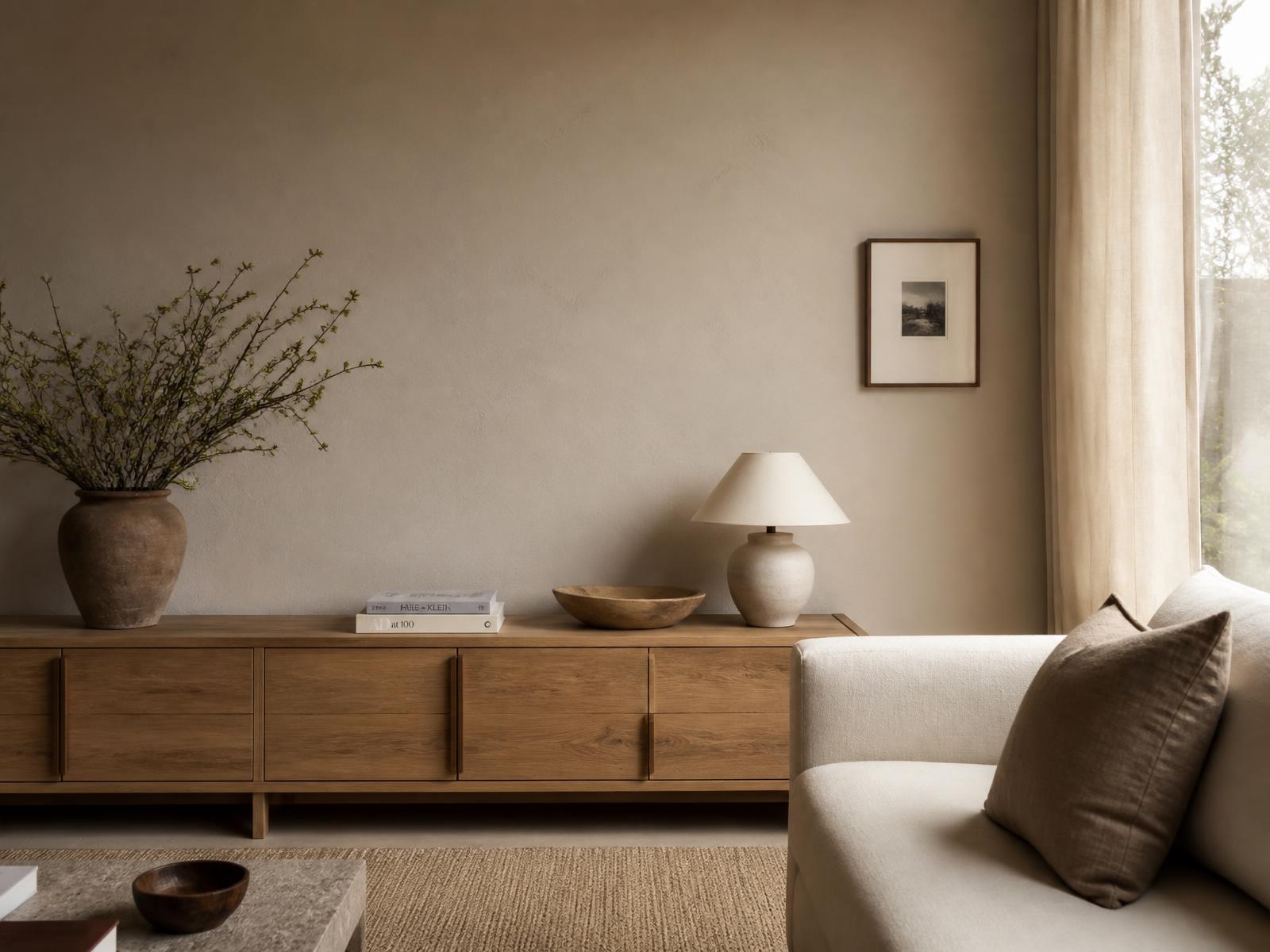
Hallway Wallpaper Ideas for Australian Homes

The hallway is the first room anyone sees and usually the last one to get any attention. It's also one of the easiest places in the house to try wallpaper. You walk through a hallway rather than sit in it, so a pattern that might feel like a lot in a bedroom feels right here.
Australian hallways tend to come in a few familiar shapes. There's the long central corridor of a Federation house or a Queenslander, the short and often dark entry of an apartment, and the narrow terrace passage where you can almost touch both walls. Each one wants a slightly different approach. Here's how to work out yours, plus how much wallpaper a hallway actually takes.
Start with the shape of the space
Long and narrow. The classic problem is a corridor that feels like a tunnel. Vertical lines help, because they draw the eye up and make the ceiling feel higher. A fine vertical design like Shimmered Strands suits a tall, skinny hall, and there are more options in the stripes collection. The other trick is to paper only the end wall. A bold design or mural at the far end gives the corridor somewhere to walk towards, and it visually shortens the run.
Short entries. An apartment entry might be a single wall between the front door and the living area. Treat it as a feature wall. You pass it in a few seconds, so this is a good place for a design you love but wouldn't want to look at from the couch all night.
Wide halls and stair voids. Older homes and two-storey builds often have generous circulation space. Wrapping the whole hallway in one quiet texture makes it read as a single calm space that ties together the rooms off it.
Light or dark?
Both work, for different reasons.
A light, textured design is the safe bet for a hallway with no windows. Plaster and linen looks give a flat wall some depth while keeping it bright. White Plaster and Sand Plaster have a soft limewash feel, and Linen Drift reads like warm woven fabric. The plaster collection is the place to start if you want texture without pattern.
Going dark is the braver move. It's often the better one too, in a hallway that never gets natural light anyway. Deep colour makes walls recede, so the edges of a narrow space become less obvious, and the rooms at either end feel brighter when you step into them. If you go dark, fit warm white globes (2700K to 3000K). They're the difference between a wall that looks rich and one that looks muddy.
Get the pattern scale right
Scale matters more in a hallway than anywhere else in the house, because you see most of it up close. You're rarely more than a metre from the wall.
Small and medium patterns suit the long side walls you walk past. Large scale belongs on an end wall, where you see the whole design from the other end of the corridor.
Every Luxe Walls design lets you choose the pattern scale with a slider when you order. That means the same design can be dialled down for a narrow passage and up for a feature wall at the end. If one design runs through the whole hallway, keep the scale the same on every wall so the pattern doesn't jump as you turn a corner.
Living with bags, prams and scuffs
Hallways get knocked. School bags, the vacuum cleaner and anyone carrying a box will all brush the walls eventually. A few choices make a big difference.
Pick a pattern that forgives. Mid-tone textures and small all-over patterns hide marks far better than a flat pale colour. A plaster or linen design already has tonal variation, so a light scuff blends in.
Split the wall. Paper the top two thirds and paint below a dado line in a hard-wearing finish. It's a traditional hallway treatment for good reason, and it looks particularly at home in period houses.
Press the edges. Most lifting starts at a corner or cut edge that never got pressed down properly. Smooth each panel from the centre out and go back over every edge, especially external corners at the end of a hall.
Check the wall first. Hallways often have old paint that has turned chalky. Wipe the wall with a dark cloth. If colour comes off on the cloth, clean and seal it before you start. If you've just repainted, give it about four weeks to cure. Rough render needs extra preparation, and our guide to wallpapering over textured walls walks through it.
Ideas by style
Period homes. Federation and Victorian hallways were made for pattern, with high ceilings, cornices and timber floors to carry it. The heritage collection has florals and damasks that sit comfortably in those spaces. Peel and stick also means you aren't pasting anything onto original plaster.
Modern and minimal. Linear Panels gives you the rhythm of timber battens on a flat wall, which looks sharp in a new build where the hallway runs straight off an open-plan living area.
Relaxed and coastal. Soft horizontal designs like Drifted Linen or the hand-painted lines of Coastal Strokes keep things easygoing in a beach house or a bright family home.
An artist piece. A hallway is a gallery wall waiting to happen. Agung in White by Kylie Harber has blue watercolour palms and mountains on a crisp white ground, light enough for a narrow hall and interesting enough to stop people at the front door. Artist collections are $99/m².
For more designs picked for these spaces, browse the hallway room page.
How much wallpaper does a hallway take?
Usually less than people expect. Measure each wall you plan to cover as one full rectangle: width at the top, middle and bottom, height at both ends and the middle, then use the largest figures. You trim around doors and light switches when you hang it.
Here's a typical long hallway wall. It's 4.0m long and 2.4m high, which is 9.6m². A 10% allowance is added for trimming, taking it to 10.56m², charged to the next 0.1m², so 10.6m². On the core range, from $79/m², that wall comes to $837.40. The same wall in an artist design at $99/m² is $1,049.40. Both are well over the $250 free shipping threshold, and Afterpay is available.
One thing to watch with entries: there's a 3m² minimum order. A short wall 1.2m wide and 2.4m high is only 2.88m², so it's worth papering the wall opposite too, or adding a second small space to the same order.
Each wall is printed to order and split into equal panels between 700mm and 900mm wide, with a 15mm overlap built into every join. Orders are dispatched within 5 to 7 business days and delivered 3 to 5 business days after that. Every order is covered by a 2-year warranty against fading and adhesion failure.
Stick a sample up in the hallway first
Hallway light is hard to judge on a screen. Many hallways have no window at all and run on downlights, which changes how a colour reads.
Order a $10 sample, printed on the actual peel and stick wallpaper, and stick it up on the hallway wall itself. Look at it in the morning, again at night with the lights on, and from the far end of the corridor. The $10 is credited against a wallpaper order placed within 30 days. Order your samples here.
If you're an interior designer, stylist or builder specifying hallways and common areas, approved trade accounts get $59/m² on the core range and $79/m² on artist originals (some licensed ranges excluded). Apply on our trade page. It's a self-install product, so include your installer in the quote.
Frequently asked questions
Explore Related Collections
Continue Reading
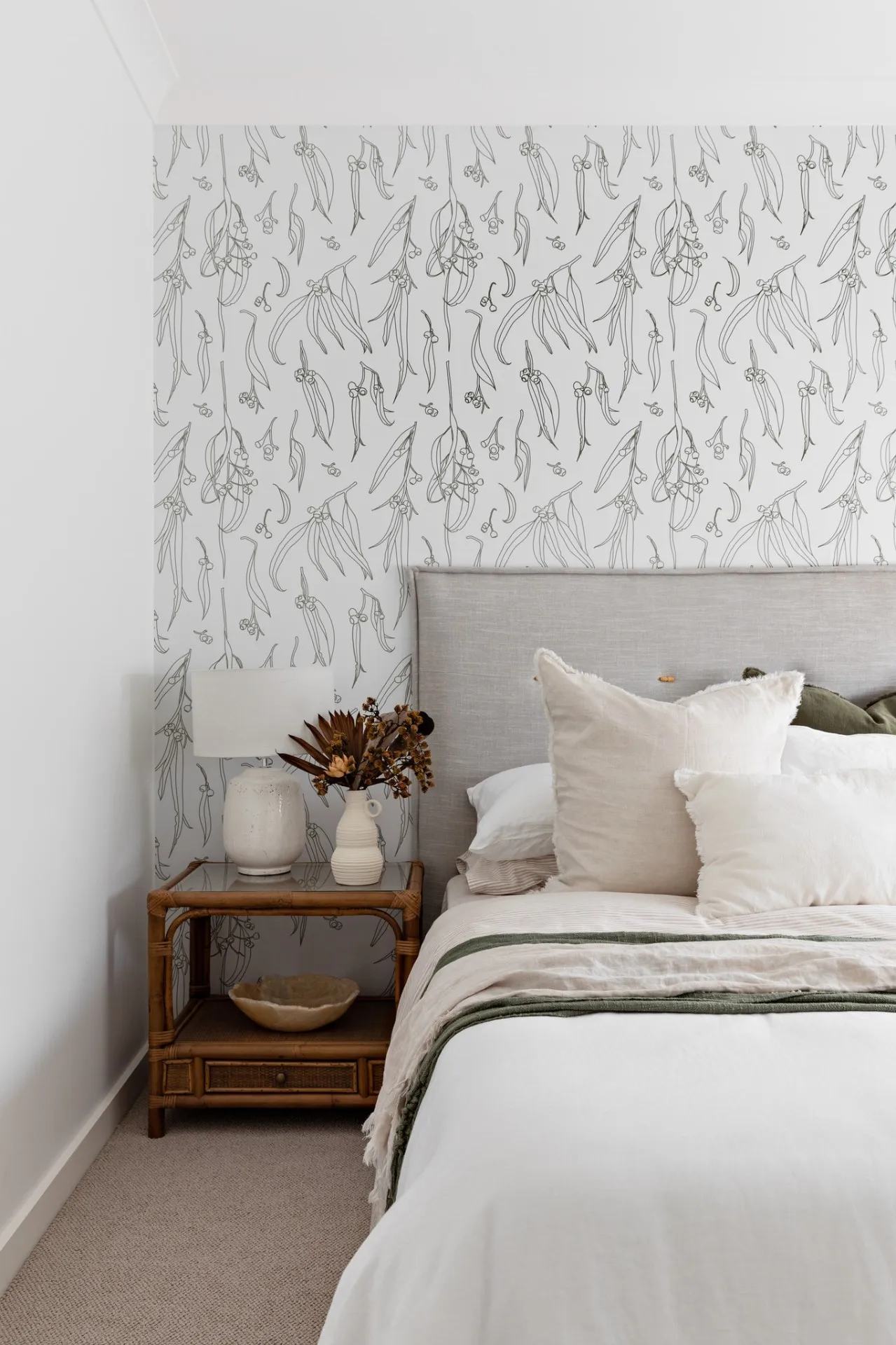
15 Bedroom Wallpaper Ideas That Australian Interior Designers Love
Inspiration • 9 min read
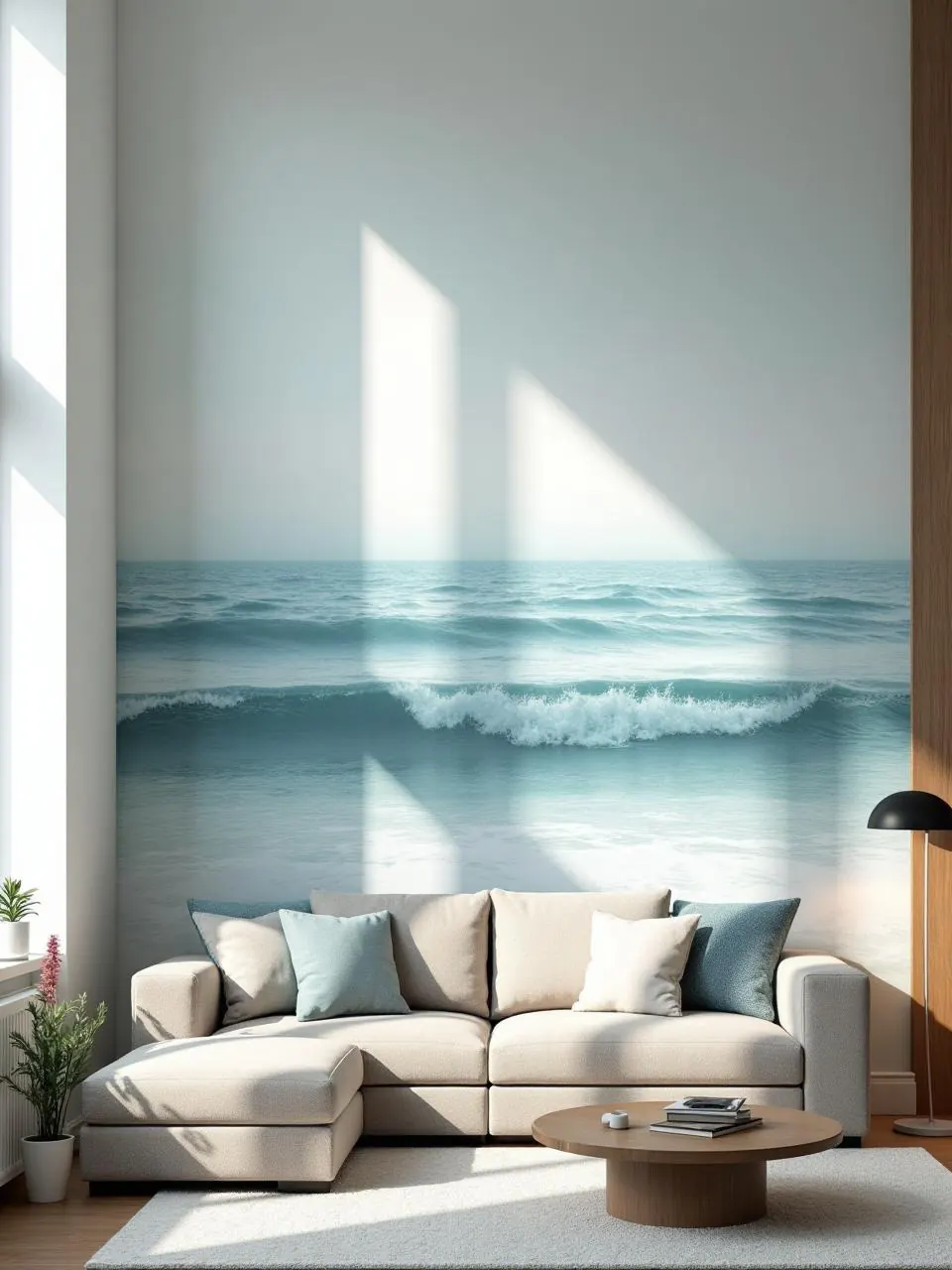
Feature Wall Ideas for Australian Homes
Inspiration • 8 min read

Dining Room Wallpaper Ideas for Australian Homes
Inspiration • 7 min read
Wallpaper in the Kitchen and Laundry: Splashbacks, Pantries and Small-Space Wins
Inspiration • 8 min read